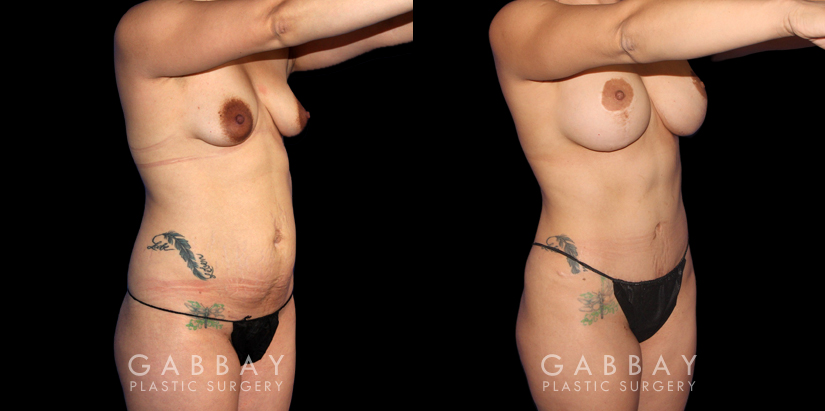
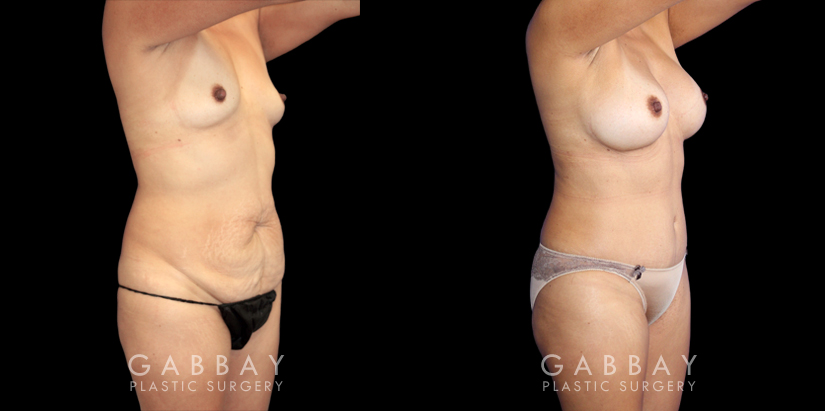
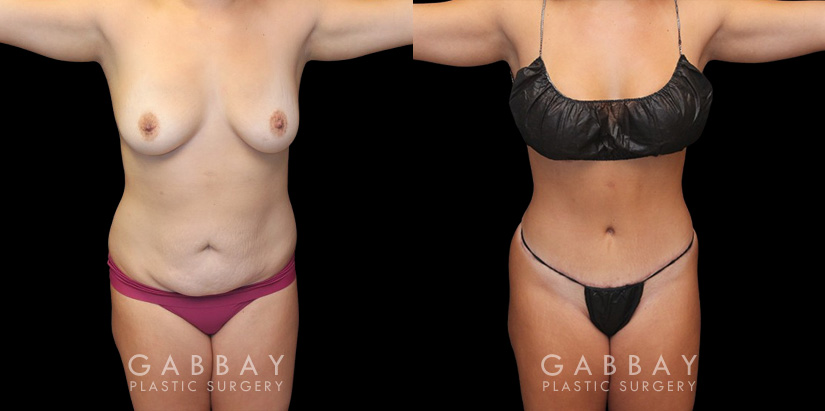
Combined surgery carries the risks of each procedure: bleeding, infection, fluid buildup, slow wound healing, lasting numbness, uneven contours, blood clots and anesthesia complications. Breast surgery can change nipple sensation and milk supply.
The tummy tuck usually carries the most risk in the combination, and that risk rises with a higher body mass index, older age and more procedures in one sitting. That’s why your health review can change the plan as much as your goals do.
Before surgery, your blood-clot risk should be screened with a standard scoring tool. Ask how your result shapes the plan, since in higher-risk patients clots can appear weeks after surgery.
Implants can rupture or develop tight scar tissue around them, and they aren’t lifetime devices, so plan for the possibility of more surgery. Because silicone ruptures are usually silent, the FDA recommends periodic ultrasound or MRI screening starting five to six years after surgery, and that screening may not be covered by insurance.
Call the practice promptly about fever, spreading redness, an incision that opens, worsening pain, or calf or leg pain with swelling. Call 911 for sudden chest pain or shortness of breath.